
This 2 day Lean White Belt presentation is suited for the executive management and consists of 193 slides in all and comprises of the following:
This is meant for the senior/top management and is equivalent to an Yellow Belt for management.
Introduction to World-Class Practices
• Defining World-Class
• Creating a Vision & Benchmarking
• Introduction to Lean Thinking
• Value versus Waste & 8 Types of Waste
• Waste Hunt Exercise
Process Simplification
• Workplace Organisation (5S)
• Visual Controls & Communication
• Set-up Reduction
• Total Productive Maintenance
• Quality & Reliability
• Problem Solving & Root Cause Analysis
• Error Proofing
Process Stabilization
• Just-in-Time
• Takt Time
• Production Levelling
• Continuous Flow
• Pull Systems
• Kanban Sustenance
• Standardised Work
• Value Stream Mapping to identify opportunities
• Kaizen
• Roadmap to Achieving a Lean Enterprise
• Building Lean Culture
• Lean Assessment
• Goal Setting for Improvement
Also included with this document is a bonus zip of 41 Lean documents (includes templates, case studies, articles, posters, charts, and more).
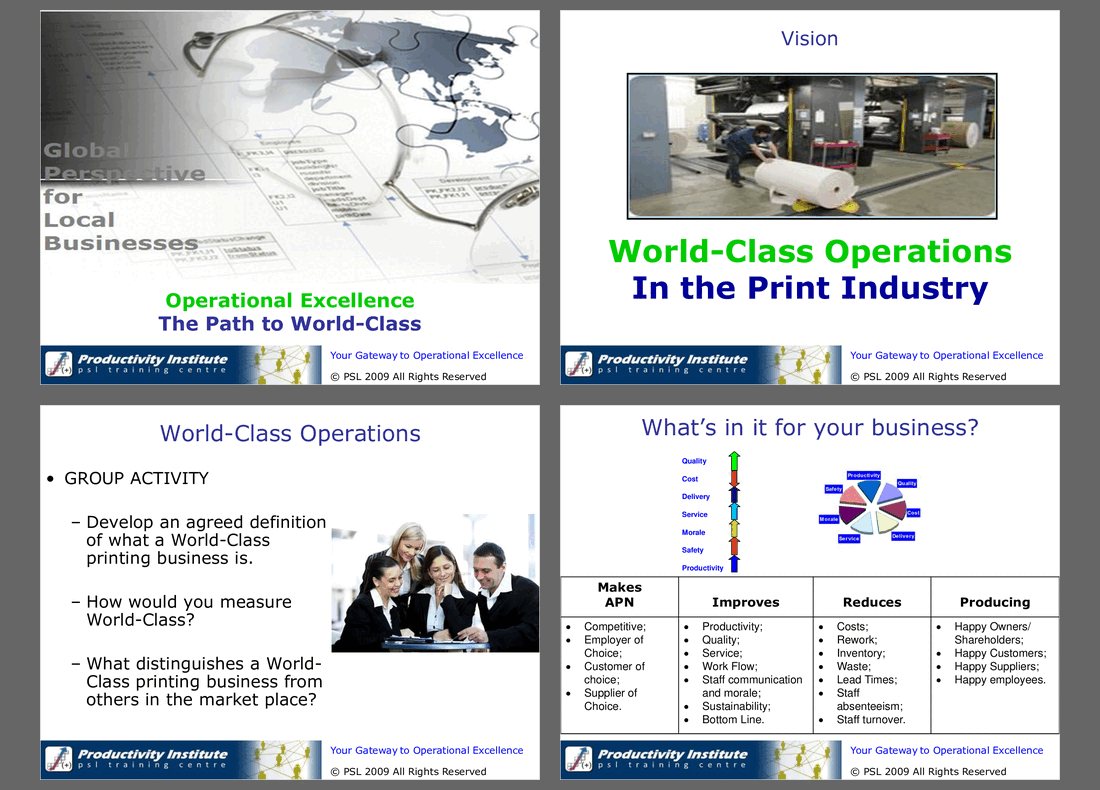
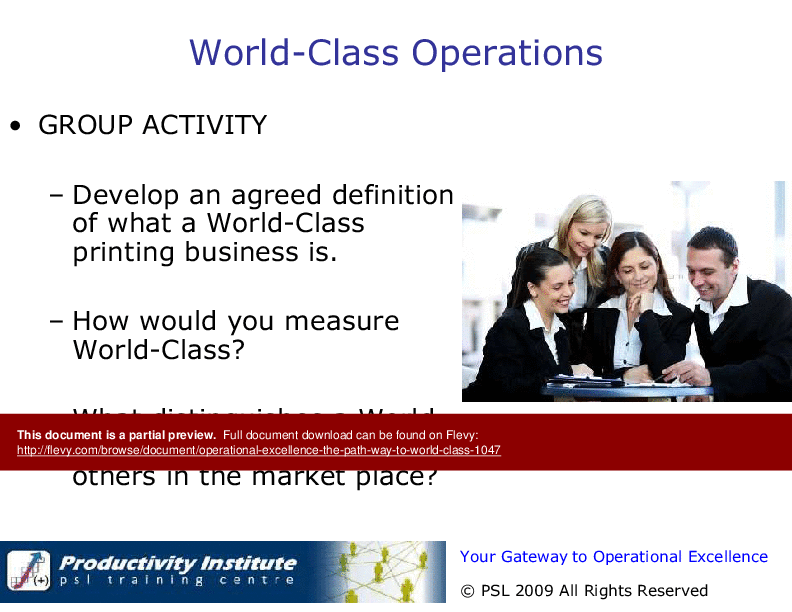
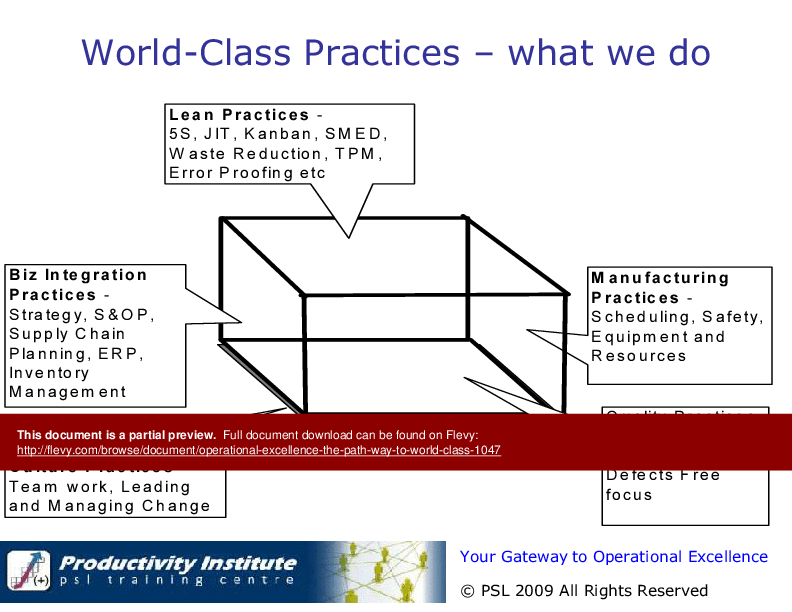
This comprehensive presentation includes interactive group activities designed to engage senior management in defining and measuring world-class standards. Participants will delve into Lean Practices such as 5S, JIT, and Kanban, alongside Biz Integration and Manufacturing Practices, ensuring a holistic approach to operational excellence.
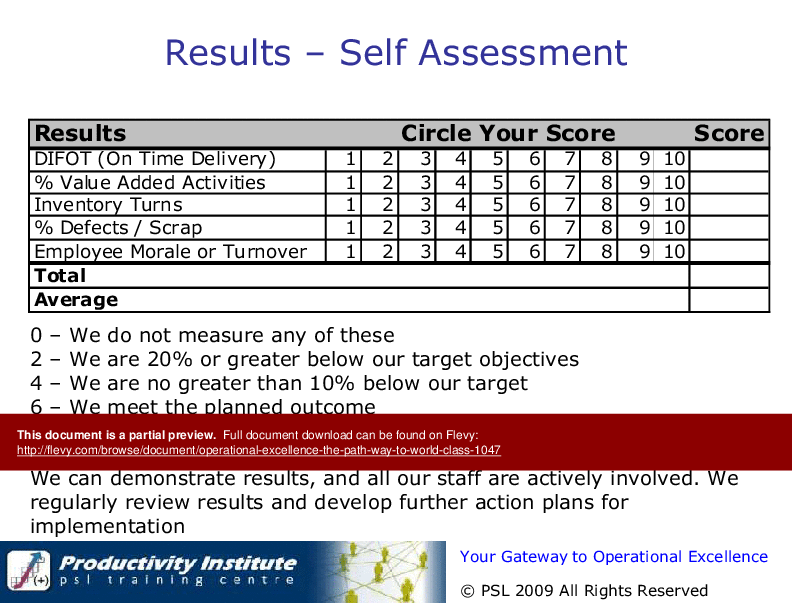
The document also features self-assessment tools to measure key performance indicators like DIFOT and Inventory Turns. By implementing these methodologies, organizations can achieve significant improvements in process efficiency, employee morale, and overall productivity. This presentation is an essential resource for executives committed to driving their organizations towards world-class operational standards.
Got a question about the product? Email us at support@flevy.com or ask the author directly by using the "Ask the Author a Question" form. If you cannot view the preview above this document description, go here to view the large preview instead.
Executive Summary
The "White Belt Operational Excellence - The Path to World-Class" presentation is a comprehensive training resource designed to introduce key Lean principles and practices. Developed by a seasoned Lean expert and certified LSS Master Black Belt, this presentation equips corporate executives, integration leaders, and consultants with essential tools such as Takt Time, Kanban, and Value Stream Mapping. By leveraging this resource, organizations can enhance operational efficiency, reduce waste, and cultivate a culture of continuous improvement, ultimately driving them towards world-class performance.
Who This Is For and When to Use
• Corporate Executives seeking to implement Lean methodologies
• Integration Leaders focused on operational excellence
• Consultants advising on process improvement strategies
• Training Managers developing Lean training programs
• Operations Managers aiming to streamline processes
Best-fit moments to use this deck:
• During organizational change initiatives to establish Lean practices
• As part of onboarding for new employees in operational roles
• In workshops aimed at enhancing team collaboration and efficiency
• For strategic planning sessions focused on operational improvements
Learning Objectives
• Define key Lean concepts and their application in business processes
• Build a foundational understanding of Takt Time and its significance
• Establish effective Kanban systems to manage workflow
• Identify and eliminate waste through Value Stream Mapping
• Create a culture of continuous improvement using Kaizen principles
• Develop practical skills for implementing Lean tools in daily operations
Table of Contents
• Introduction to World-Class Practices (page 3)
• Process Simplification (page 5)
• Sustaining Lean Practices (page 8)
• Just-in-Time (JIT) Principles (page 10)
• Takt Time Calculation (page 12)
• Continuous Flow Manufacturing (page 15)
• Pull Systems and Kanban (page 18)
• Standardized Work Implementation (page 20)
• Value Stream Mapping (page 22)
• Building a Lean Culture (page 25)
• Goal Setting for Improvement (page 28)
Primary Topics Covered
• World-Class Operations - Understanding the characteristics that define a world-class organization and how to measure success.
• Lean Principles - Introduction to Lean thinking, including the elimination of waste and the importance of customer focus.
• 5S Methodology - A systematic approach to workplace organization that enhances efficiency and safety.
• Takt Time - A critical metric for balancing production rates with customer demand to prevent overproduction.
• Kanban Systems - Tools for regulating workflow and inventory levels to ensure a smooth production process.
• Value Stream Mapping - A visual tool for identifying waste and optimizing processes across the value chain.
Deliverables, Templates, and Tools
• Lean assessment templates for self-evaluation of operational practices
• Kanban board examples for workflow management
• Value Stream Mapping templates to visualize process flows
• 5S implementation checklists for workplace organization
• Standardized work documentation templates for process consistency
• Continuous improvement action plans to drive ongoing enhancements
Slide Highlights
• Overview of Lean principles and their impact on operational efficiency
• Visual representations of Takt Time calculations and their applications
• Case studies demonstrating successful Lean implementations
• Interactive group activities designed to engage participants in waste identification
• Key metrics for measuring operational performance and improvement
Potential Workshop Agenda
Introduction to Lean Principles (90 minutes)
• Overview of Lean concepts and their relevance
• Group discussion on current operational challenges
Takt Time and Kanban Workshop (60 minutes)
• Hands-on activities to calculate Takt Time
• Developing Kanban systems tailored to specific processes
Value Stream Mapping Session (90 minutes)
• Creating current and future state maps
• Identifying waste and improvement opportunities
Sustaining Lean Practices (60 minutes)
• Strategies for embedding Lean culture within the organization
• Setting goals for continuous improvement
Customization Guidance
• Tailor the presentation to reflect specific industry challenges and terminology.
• Adjust case studies and examples to align with the audience's operational context.
• Incorporate organizational metrics and goals into the training materials.
• Modify workshop activities to focus on relevant processes within the organization.
Secondary Topics Covered
• Total Productive Maintenance (TPM) for equipment reliability
• Error Proofing (Poka-Yoke) techniques to prevent defects
• Problem Solving and Root Cause Analysis methodologies
• Building a Lean culture through employee engagement and training
• The role of leadership in driving Lean initiatives
FAQ
What is the primary goal of Lean?
Lean aims to eliminate waste and enhance value for customers by optimizing processes and improving efficiency.
How can Takt Time improve production efficiency?
Takt Time helps align production rates with customer demand, ensuring that resources are allocated effectively and reducing the risk of overproduction.
What is the significance of Kanban in Lean?
Kanban serves as a visual tool to manage workflow and inventory, facilitating a pull system that responds to actual demand rather than forecasts.
How does Value Stream Mapping contribute to Lean initiatives?
Value Stream Mapping allows organizations to visualize their processes, identify waste, and develop targeted improvement strategies.
What are the benefits of implementing 5S?
5S enhances workplace organization, increases safety, and fosters a culture of continuous improvement by promoting efficiency and reducing waste.
How can organizations sustain Lean practices over time?
Sustaining Lean requires ongoing training, regular assessments, and a commitment to continuous improvement from all levels of the organization.
What role does leadership play in Lean transformation?
Effective leadership is crucial for fostering a Lean culture, driving change initiatives, and ensuring employee engagement in Lean practices.
Can Lean principles be applied in non-manufacturing environments?
Yes, Lean principles can be adapted to various sectors, including service industries, healthcare, and administrative functions, to improve efficiency and reduce waste.
Glossary
• Lean - A methodology focused on eliminating waste and improving processes.
• Takt Time - The time available to produce a product to meet customer demand.
• Kanban - A visual signal used to manage workflow and inventory levels.
• 5S - A workplace organization method that stands for Sort, Set in Order, Shine, Standardize, and Sustain.
• Value Stream Mapping - A tool for visualizing and analyzing the flow of materials and information in a process.
• Continuous Improvement - An ongoing effort to enhance products, services, or processes.
• Total Productive Maintenance (TPM) - A proactive maintenance approach that involves all employees in maintaining equipment.
• Error Proofing (Poka-Yoke) - Techniques designed to prevent errors in manufacturing processes.
• Root Cause Analysis - A method for identifying the underlying causes of problems.
• Kaizen - A philosophy of continuous improvement involving all employees.
• Pull System - A production strategy that initiates production based on customer demand.
• Standardized Work - A consistent approach to performing tasks to ensure quality and efficiency.
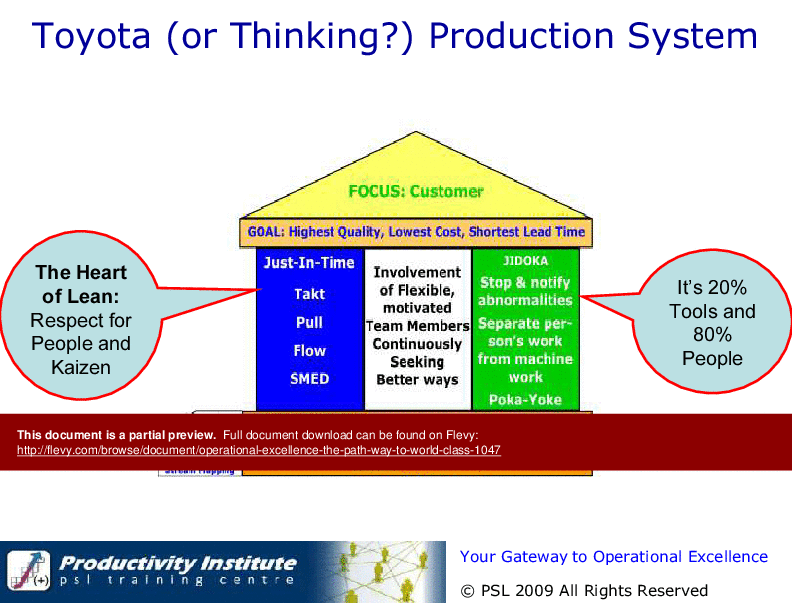
• Jidoka - A principle of the Toyota Production System that emphasizes building quality into processes.
• Waste - Any activity that does not add value to the customer.
• Cycle Time - The total time from the beginning to the end of a process.

• Overall Equipment Effectiveness (OEE) - A measure of how effectively a manufacturing operation is utilized.
• Defects - Products that do not meet quality standards.
• Lead Time - The total time it takes to fulfill a customer order.
• Work In Progress (WIP) - Inventory that is in the process of being manufactured.
• Visual Management - The use of visual signals to communicate information and improve efficiency.
• Continuous Flow - A production method where products move through the process without delays.
Source: Best Practices in Operational Excellence, Takt Time PowerPoint Slides: White Belt Operational Excellence - The Path to World-Class PowerPoint (PPT) Presentation Slide Deck, OpEx Academy NZ
This document is available as part of the following discounted bundle(s):
Save %!
PSL - Lean Execution Bundle
This bundle contains 11 total documents. See all the documents to the right.
|
Receive our FREE presentation on Operational Excellence
This 50-slide presentation provides a high-level introduction to the 4 Building Blocks of Operational Excellence. Achieving OpEx requires the implementation of a Business Execution System that integrates these 4 building blocks. |